
Among the figures found within Celtic mythology, few embody transformation as completely as Cerridwen.
She is remembered as a goddess of wisdom, inspiration, magic, rebirth, and profound change, often associated with the sacred cauldron, poetic inspiration, prophecy, and the difficult process of becoming something entirely new.
Unlike deities associated solely with beauty or comfort, Cerridwen’s power is deeply transformative. She is not the gentle hand that keeps things as they are.
She is the force that breaks stagnation.
The one who understands that wisdom is rarely gained without change.
Who Is Cerridwen?
Cerridwen originates from Welsh mythology and appears most prominently within the tale of Taliesin, one of the most well-known stories connected to inspiration and mystical transformation within Celtic tradition.
She is often depicted as:
Keeper of the cauldron of wisdom
A goddess connected to poetic inspiration and prophecy
A figure of death and rebirth
A guardian of hidden knowledge
A powerful sorceress and initiatory figure
Her imagery is rich with symbolism:
Cauldrons
Transformation
Moon symbolism
Herbs and brews
Cycles of destruction and renewal
She represents the understanding that growth is not always gentle.
Sometimes transformation requires dissolution before rebirth can occur.
The Tale of Taliesin
One of the most important myths involving Cerridwen centers around her magical cauldron.
According to Welsh tradition, Cerridwen sought to create a potion that would grant immense wisdom and inspiration to her son, whom she believed lacked physical beauty. The brew required a year and a day to prepare, and a servant boy named Gwion Bach was tasked with stirring the cauldron.
As the potion cooked, three drops splashed onto Gwion’s thumb, instantly granting him the wisdom the potion was intended to bestow. Realizing what had happened, Cerridwen pursued him in fury.
What follows is one of the most symbolic chase sequences in Celtic mythology.
Gwion transformed repeatedly to escape her:
Hare
Fish
Bird
And Cerridwen transformed as well to continue the pursuit:
Hound
Otter
Hawk
Finally, Gwion became a grain of corn, and Cerridwen transformed into a hen and swallowed him whole.
From this act came rebirth.
Gwion was later reborn as Taliesin, the legendary poet and seer.
This myth is deeply symbolic. It speaks not only of wisdom gained, but of the painful, consuming process required to become something greater than what one once was.
Cerridwen and the Cauldron
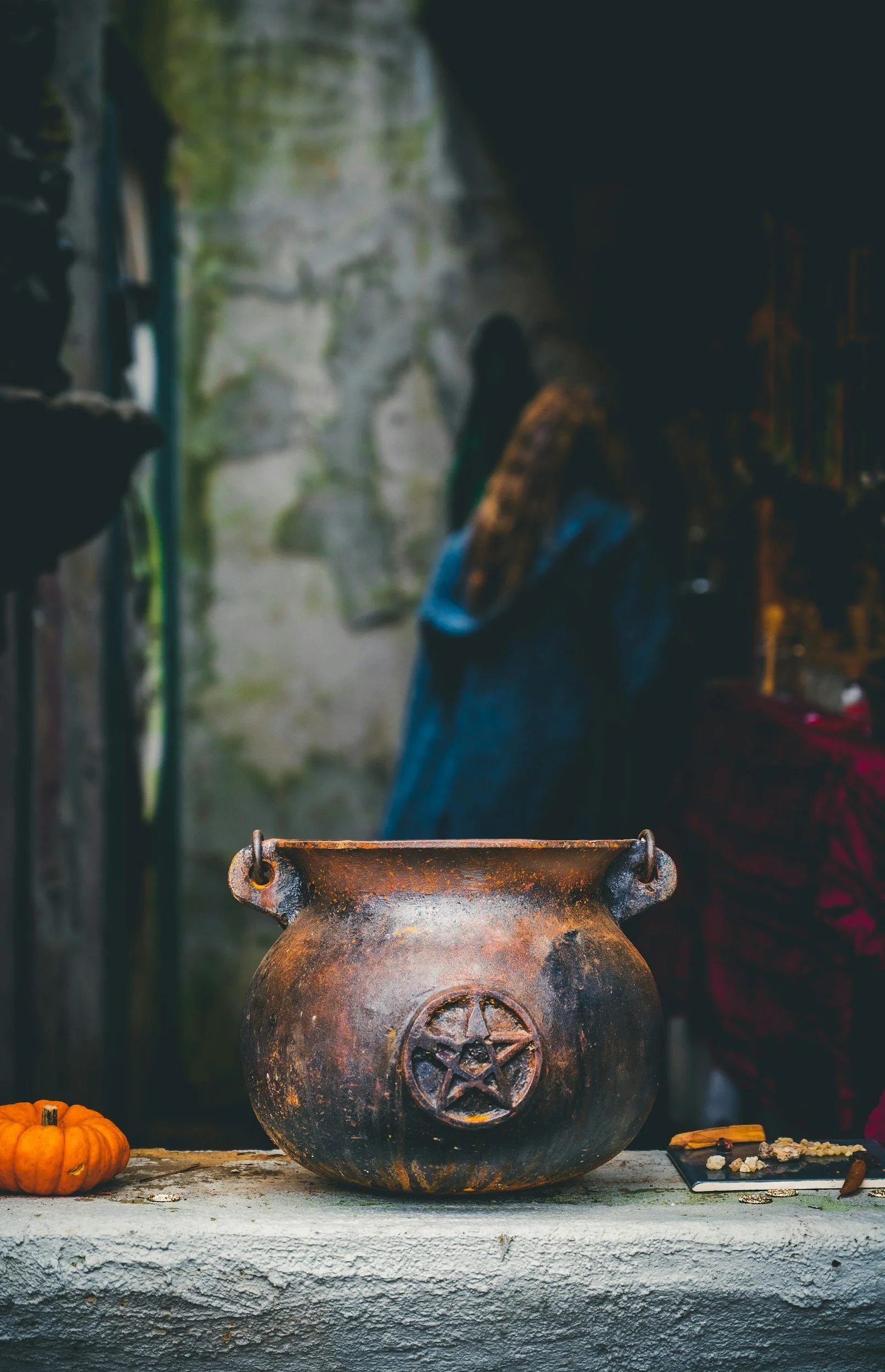
The cauldron is one of Cerridwen’s most important symbols.
In Celtic tradition, cauldrons are not merely cooking vessels, they are symbols of:
Transformation
Creation
Initiation
Death and rebirth
Sacred knowledge
Cerridwen’s cauldron is often understood as a source of:
Inspiration
Mystical understanding
Spiritual evolution
But importantly, not everyone can approach it casually.
The wisdom found through Cerridwen often comes through challenge, shadow work, endings, and necessary change.
Her lessons are not superficial.
They are initiatory.
A Goddess of Transformation
Transformation is at the core of Cerridwen’s energy.
Not transformation in the modern sense of quick reinvention or aesthetic change, but deep, structural transformation.
The kind that changes:
Perspective
Identity
Spiritual understanding
Direction in life
This is why many practitioners feel drawn to Cerridwen during periods of:
Spiritual awakening
Shadow work
Major life transitions
Creative rebirth
Personal upheaval
Her presence is often associated with crossing thresholds and emerging altered by the experience.
Cerridwen and Inspiration
Cerridwen is also strongly connected to inspiration, particularly creative and poetic inspiration.
In Celtic tradition, inspiration was not viewed as something casual. It was sacred, transformative, and often spiritually charged.
Taliesin himself became one of the greatest poets and seers in Welsh mythology because of the wisdom gained through Cerridwen’s cauldron.
Because of this, many people working creatively, writers, artists, musicians, and spiritual practitioners, feel drawn to her energy when seeking:
Creative flow
Deeper insight
Inspired speech or writing
Spiritual creativity
But again, Cerridwen’s inspiration is rarely surface-level.
It asks for honesty and depth.
Working with Cerridwen
Those who feel drawn to Cerridwen often approach her through:
Cauldron symbolism
Candle work
Herbal work and teas
Moon rituals
Meditation and dreamwork
Poetry or journaling
Offerings may include:
Herbs
Bread or grains
Tea
Creative writing
Water or milk
Symbols of transformation or wisdom
Her energy is often described as ancient, powerful, maternal, and uncompromising.
Not cruel, but deeply honest.
A Spiritual Perspective on Cerridwen
Cerridwen reminds practitioners that wisdom is rarely comfortable.
Transformation often asks for:
Letting go
Facing difficult truths
Releasing outdated versions of the self
Entering uncertainty before clarity emerges
This is why she continues to resonate so strongly with those on serious spiritual paths.
She represents the understanding that becoming is a process.
And processes are rarely effortless.
Closing Thoughts
Cerridwen is not simply a goddess of magic.
She is a goddess of transformation through experience.
Of wisdom earned through change.
Of inspiration born from challenge.
Of rebirth that only comes after surrendering what can no longer remain the same.
Her cauldron is not a symbol of comfort.
It is a symbol of becoming.
And for those willing to undergo that process, Cerridwen remains one of the most powerful and enduring figures within Celtic spiritual tradition.
