
Spring arrives with movement.
Plants bloom, pollen rises, and the air shifts. For many, this season brings renewal. For others, it brings congestion, irritation, and fatigue.
Allergies are not just an inconvenience, they are the body reacting to environmental change.
And within herbal traditions, this reaction is not only treated, but supported.
Understanding Seasonal Allergies
Spring allergies are often tied to pollen, fine particles released by trees, grasses, and plants.
The body identifies these particles as threats, triggering symptoms like:
Sneezing
Congestion
Itchy eyes
Fatigue
From an herbal perspective, this is not just irritation, it is the immune system in overreaction.
The goal is not to suppress the body, but to support it.
Herbs That Support Allergy Relief
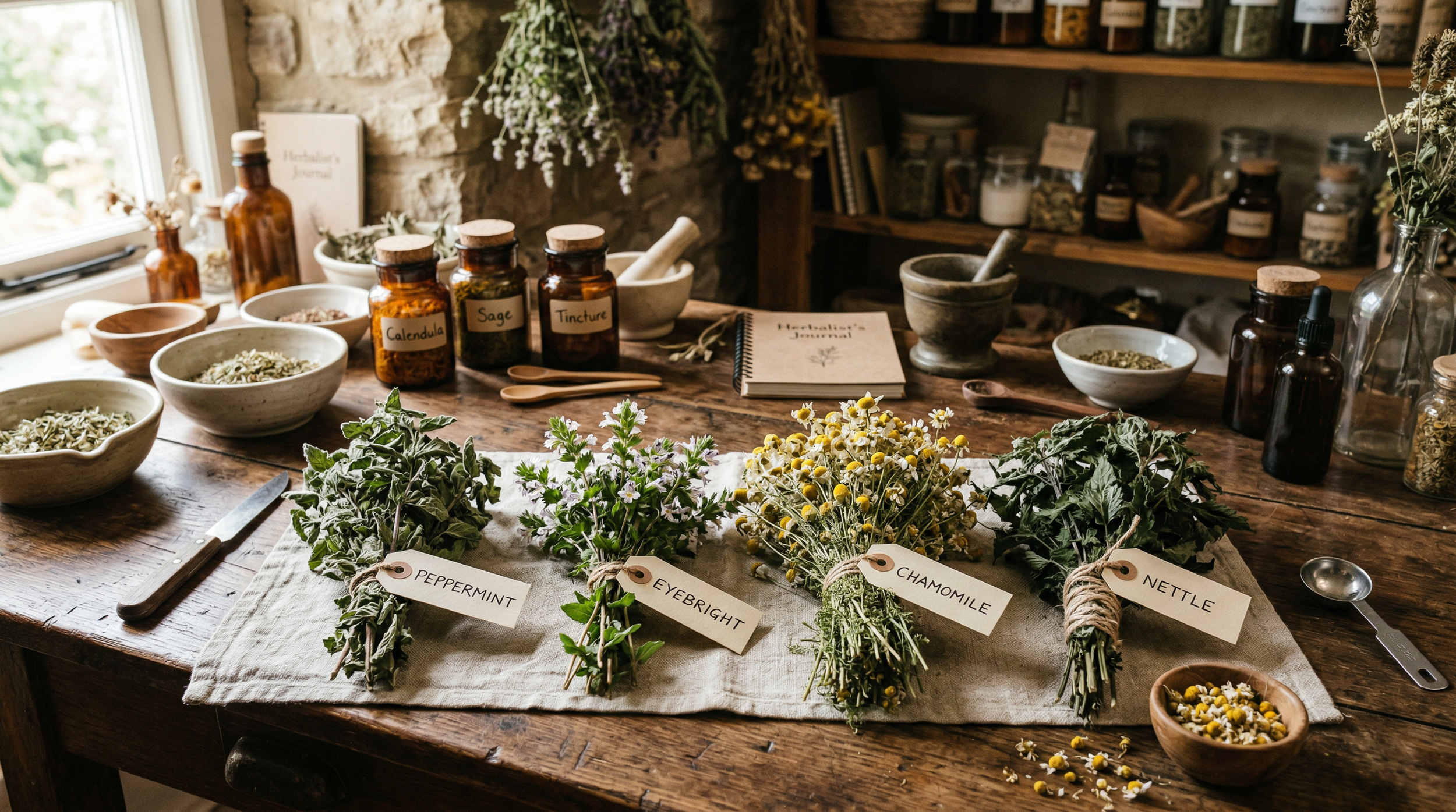
Certain herbs have long been used to ease seasonal discomfort and strengthen the body’s response.
Nettle (Urtica dioica)
Nettle is one of the most well-known herbs for allergies.
It works as a natural antihistamine, helping reduce inflammation and histamine response. It is also rich in minerals, making it deeply nourishing.
Often consumed as tea or tincture, nettle supports the body over time rather than offering instant relief.
Chamomile
Chamomile soothes irritation and calms the body.
It is especially helpful for those whose allergies are worsened by stress or inflammation. Its gentle nature makes it ideal for daily use.
Peppermint
Peppermint helps open the airways and ease congestion.
Its cooling properties make it particularly effective for sinus pressure and breathing discomfort.
Eyebright
Traditionally used for eye-related symptoms, eyebright supports relief from itchy, watery eyes, common during allergy season.
The Role of Local Honey
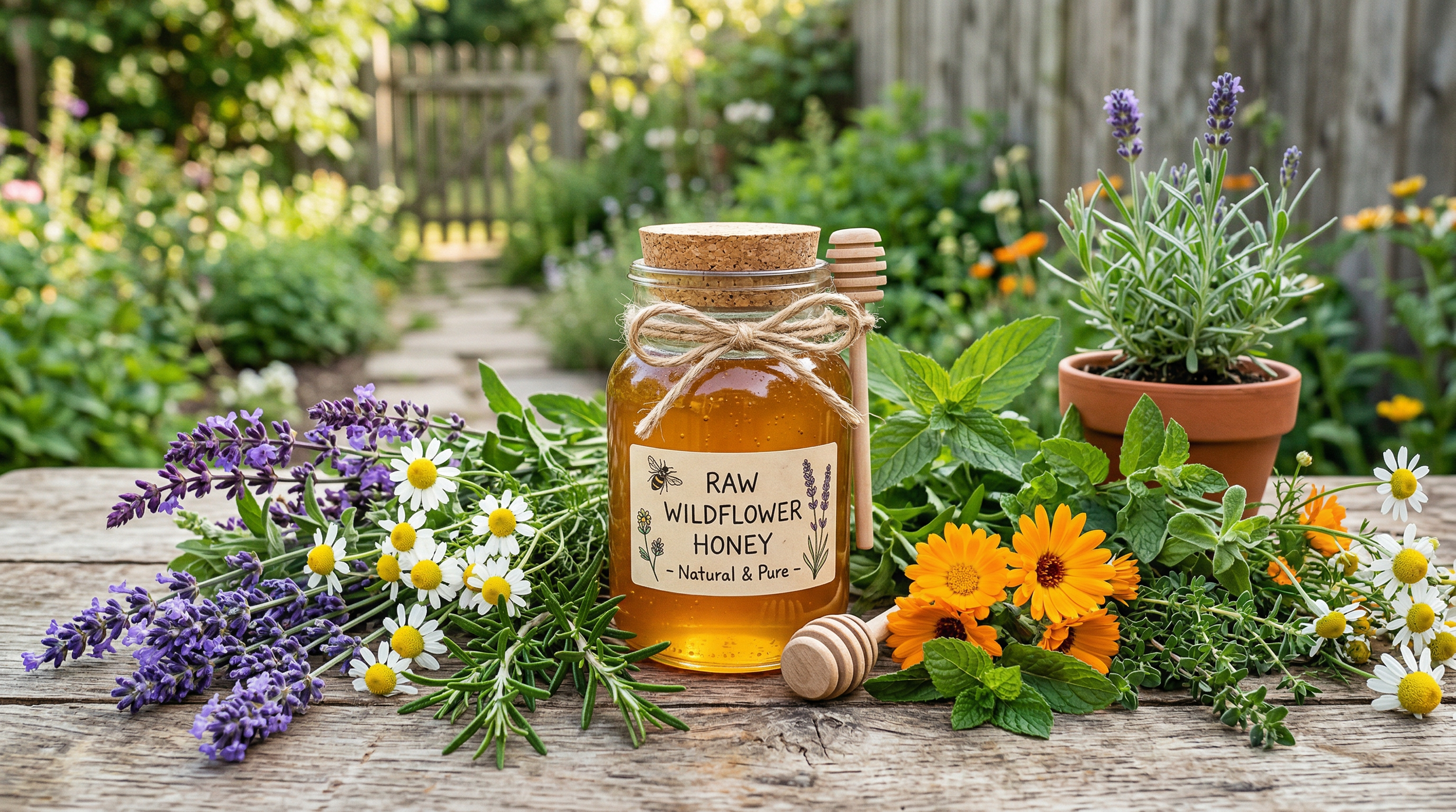
Local honey has been used as a natural approach to seasonal allergies for generations.
The idea is simple:
Honey produced by local bees contains small amounts of local pollen. Consuming it regularly may help the body gradually build tolerance.
While not a guaranteed cure, many find it supportive when used consistently.
How to Use Local Honey
Take a small spoonful daily
Add to tea (once cooled slightly to preserve properties)
Use regularly rather than occasionally
Consistency is key.
Creating an Allergy Support Tea
A simple blend can include:
Nettle
Peppermint
Chamomile
Steep in hot water for 10–15 minutes.
Add local honey once the tea has cooled slightly.
Drink daily during allergy season.
Supporting the Body Holistically
Herbs work best when paired with supportive habits:
Staying hydrated
Reducing inflammatory foods
Resting when needed
Spending time outdoors gradually
The body adapts, but it needs support.
Working With the Season
Spring is not meant to be resisted.
It is meant to be worked with.
By supporting the body gently, consistently, and intentionally, allergy season becomes less about suffering, and more about adjustment.
