
Long before modern medicine reached many communities, there were curanderas.
Women, and sometimes men, who carried knowledge of herbs, spirit, prayer, and the body. Who understood that healing was not just physical, but emotional and spiritual.
The role of the curandera is deeply rooted in Mexican tradition, shaped by Indigenous knowledge, Spanish influence, and generations of lived experience.
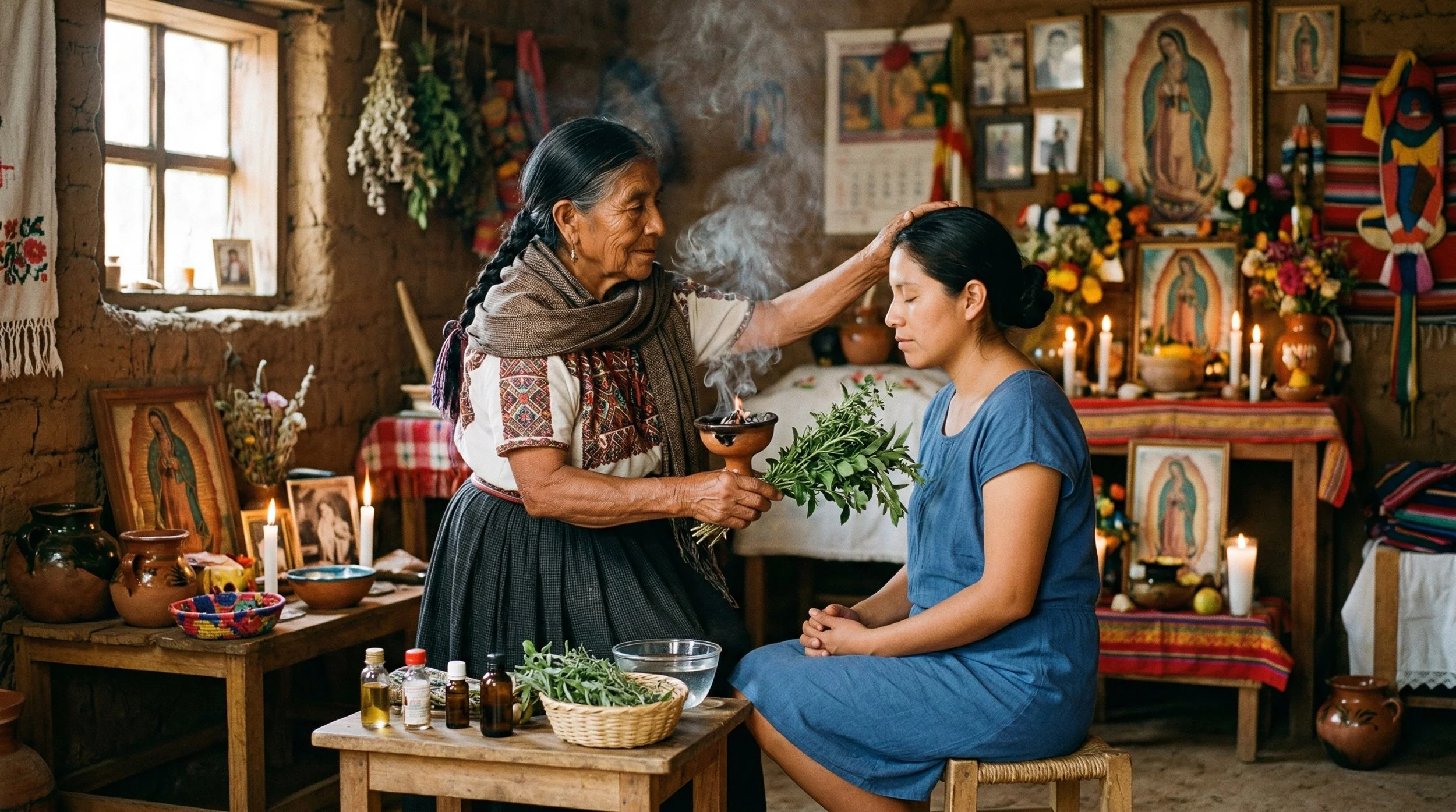
Origins of Curanderismo
Curanderismo is a syncretic healing system.
It draws from Indigenous Mesoamerican practices, blended with elements introduced during colonization, including Catholic prayers and saints.
Rather than replacing Indigenous knowledge, these influences layered together, creating a system that is both spiritual and practical.
Curanderas became bridges between worlds.
Between the physical and spiritual. Between illness and healing. Between community and the unseen.
The Role of the Curandera
A curandera is not just a healer.
She is a:
Herbalist
Spiritual guide
Midwife
Energy worker
Counselor
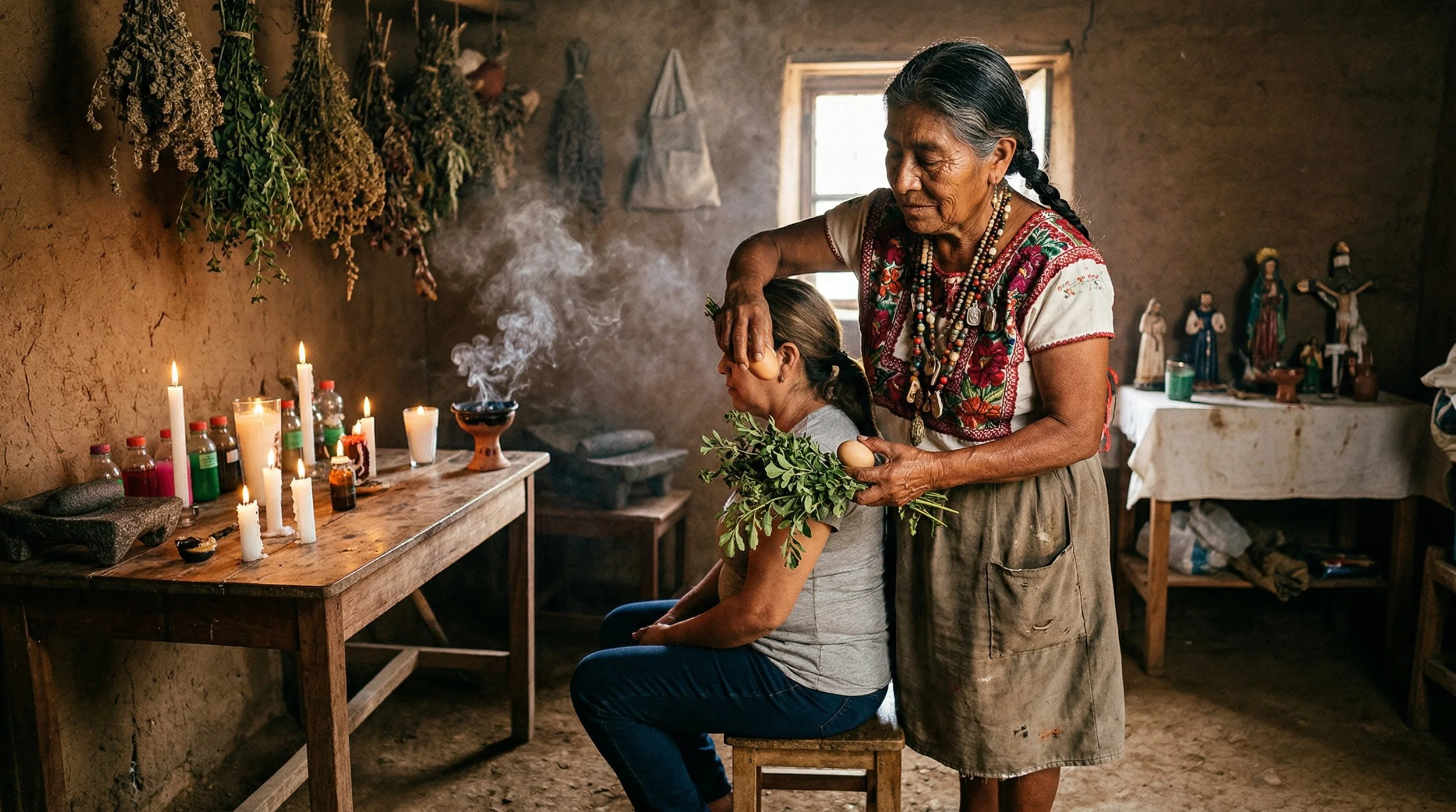
Healing sessions often include limpias (spiritual cleansings), herbal remedies, prayer, and diagnosis that considers both physical and spiritual causes.
Illness is not always seen as purely biological. It can be tied to susto (soul loss), mal de ojo (evil eye), or emotional imbalance.
Knowledge Passed Through Generations
Traditionally, curanderas learn through lineage.
Knowledge is passed from elder to student, often within families. It is experiential, not institutional.
Plants are learned by touch, smell, and effect. Prayers are memorized through repetition. Healing is observed before it is practiced.
This creates a deep, embodied understanding of the work.
Curanderas and Community
Curanderas have always been community-centered.
They are often the first point of care when someone is ill, struggling, or in need of guidance. Their work is accessible, rooted, and personal.
There is trust, not just in their knowledge, but in their presence.
Survival and Continuation
Despite colonization, modernization, and attempts to discredit traditional healing, curanderismo continues.
It adapts, evolves, and persists.
Today, many practitioners honor these traditions while also navigating modern contexts, blending old knowledge with new understanding.
A Living Tradition
Curanderismo is not something frozen in the past.
It is alive.
In kitchens where herbs are brewed. In prayers whispered over candles. In hands that still know how to cleanse, to comfort, to heal.
And in every practitioner who continues the work, the lineage lives on.
