
Symbolic writing has existed in spiritual and magical traditions for as long as humans have recorded meaning.
From carved stone markings to handwritten petitions, from sacred alphabets to modern occult systems, symbols have always been used as a way to compress intention into form.
Two of the most commonly discussed forms of magical symbol work in modern practice are sigils and staves.
While they are often mentioned together, they are not the same thing.
They operate differently, are constructed differently, and are used for different purposes within magical work.
Understanding the distinction helps clarify how intention is shaped, stored, and activated within symbolic practice.
What Is a Sigil?
A sigil is a symbolic representation of a specific intention.
It is typically created by:
Writing a statement of intent
Removing repeated letters
Condensing the remaining letters into a symbol
Designing a unique glyph or mark
Once created, the sigil becomes a symbolic container for that intention.
Sigils are often used in:
Manifestation work
Protection work
Personal transformation
Focused intention setting
The key characteristic of a sigil is that it is usually unique to the moment it is created.
It is not part of a larger standardized system.
Instead, it is personal, temporary in origin, and designed to hold a single focused intent.
Once charged or activated, the sigil is typically released into the subconscious or energetic field.
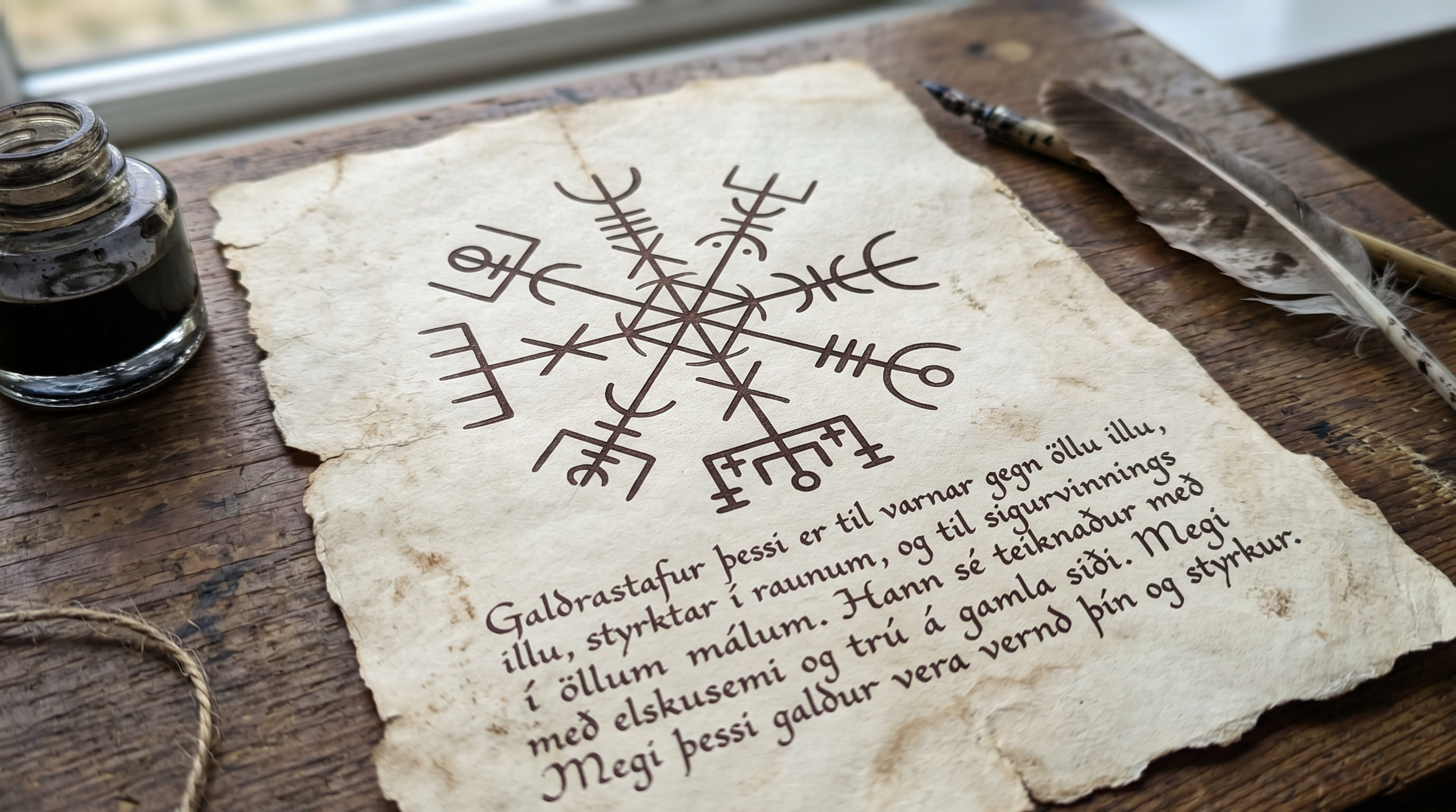
What Is a Staff (Magical Stave)?
A stave (or staves in plural) operates differently.
Rather than being a single custom symbol created from scratch, a stave is typically:
A structured symbol system
Composed of established lines, shapes, or runic elements
Built from traditional or practitioner-developed correspondences
Designed to carry layered meaning
In some traditions, staves are associated with Icelandic magical systems (often called galdrastafir), where specific symbols are used for protection, guidance, luck, or influence.
Unlike sigils, staves are often recognizable within a system, even if variations exist between practitioners.
They are not always created for one-time use.
Many staves are meant to be:
Reused
Carried forward
Passed through tradition
Applied consistently for specific outcomes
The Key Difference in Structure
The main structural difference is this:
Sigils
Built from a single intention
Usually unique and personal
Created through a reduction process (letters to symbol)
Designed for one specific purpose at a time
Staves
Built from symbolic systems or traditional forms
Often composed of multiple layered meanings
Can be reused or adapted
May carry established spiritual or cultural associations
In simple terms:
A sigil is created from language.
A stave is created from system.
The Difference in Energy Approach
Beyond structure, sigils and staves differ in how they are approached spiritually.
Sigils as Internal Work
Sigils are often used for internal transformation.
They tend to work with:
Subconscious programming
Personal intention
Direct manifestation focus
Immediate energetic imprinting
Because of this, sigils are often considered highly personal.
They are shaped by the practitioner’s own emotional and mental state at the time of creation.
Staves as Structured Influence
Staves are often used for more structured or externalized influence.
They may be associated with:
Protection over space or person
Long-term energetic support
Specific conditions or outcomes
Repeated use in ritual practice
Rather than dissolving into the subconscious, staves are often treated as active symbols that remain “in place” energetically.
Historical Context
Sigils, in their modern form, are often associated with Western occult traditions and contemporary chaos magic practices.
Staves, particularly in their most recognized forms, are associated with older Northern European folk magical traditions, especially Icelandic systems.
However, symbolic compression of intention is not limited to these systems.
Similar concepts exist in:
Arabic talismanic writing traditions
Chinese character-based spiritual symbolism
Indigenous marking and carving practices
Medieval European grimoires
Across cultures, the idea remains consistent:
Symbols can carry intention beyond spoken language.
Activation Differences
Another key difference lies in how each is activated.
Sigil Activation
Sigils are often activated through:
Meditation
Burning or destruction
Visualization
Sexual or emotional energy
Subconscious release
The activation process is often about letting go of conscious control.
Once released, the sigil is no longer actively worked.
Stave Activation
Staves are more often activated through:
Repetition or chanting
Placement in physical space
Carrying as an object
Ritual reinforcement
Ongoing use in practice
Rather than being released, staves are typically maintained.
They remain part of ongoing work.
When to Use Each
Both sigils and staves have their place in spiritual practice.
Sigils may be best for:
One-time intentions
Emotional release
Personal transformation
Manifestation focus
Internal shifts
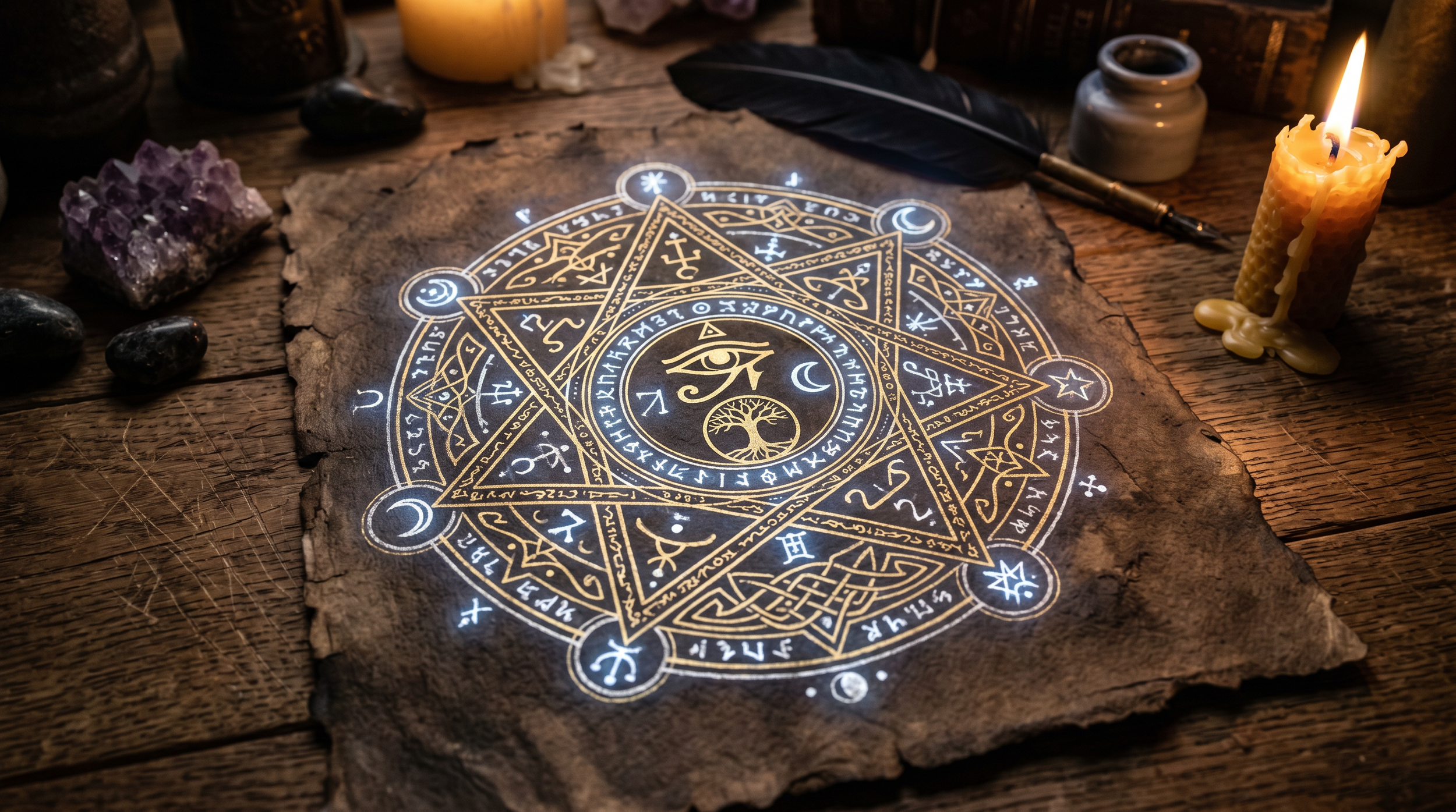
Staves may be best for:
Protection work
Long-term intentions
Environmental influence
Structured magical systems
Repeated ritual use
Neither is inherently stronger.
They simply function differently.
A Brujería Perspective on Symbols
Within many folk traditions, symbols are not just decorative or abstract.
They are functional.
They hold intention, direction, and meaning.
Whether drawn, carved, burned, or carried, the symbol becomes part of the working itself.
What matters most is not only how the symbol is created, but how it is engaged with over time.
Consistency, clarity, and intention often matter more than complexity.
Closing Thoughts
Sigils and staves are both tools of symbolic magic.
Both condense intention into form.
Both bridge the gap between thought and action.
But they do so in different ways.
A sigil is often a moment.
A stave is often a structure.
One is released.
The other is maintained.
Understanding the difference allows for more intentional and effective spiritual practice, where symbols are not just drawn, but truly understood as tools of focused will and meaning.
